The textured background is reminiscent of sandstone, the bearded man based on glass beads made by my ancestors, the ancient Phoenicians. The line art also comes from the Phoenicians - a mask with the famous "Sardonic grin".
Exploring my roots has led to some uncomfortable knowledge: the mask was linked to the ancient practice of ritual sacrifice. Just before I laid down the red lines I found a poem that echoes my pride and apprehension:
Phoenician
Unwise, wondering children play — for their lives.
They build and spoil, raise and raze, sandgrain
castles to edge the shore — an advancing standstill.
Nothing of them will remain to meet the new day.
We who are old gaze seawards, where black sails make
moveable As on the horizon, calling a name:
Alpha, Aleph, an ox head, letters that spell
our dimly literate past in a Phoenician place.
But all I remember’s a mask, its grimace or smile
like an old man’s wrinkled face — ironic, set
in the crazed rictus of a grin at something hidden.
Hard to relate if they burned their children alive
all smiling, smiling in masks to pleasure a god
who’d thus not see their terror or hear their cries
but accept the sacrifice: the life’s soft parts
disguised by that hard laughter baked to last.
We dream and stare — drowsy, late historians,
wise, after our years. In the day’s museum
such gleeful trophies wink. Keepsakes, you’d think?
each terracotta, twice fired to save its face.
These Tophet memorials haunt within our walls,
sardonic casts recording no name or age,
a comic strip we cannot conceive or face
outfacing us. (Their alphabet is ours).
Collateral. (Think — a smokescreen.) Are we blind, by half?
The drones we make explode elsewhere in fires.
So many children … their lives. Earthenware survives —
and these mad masks. Is theirs (listen) the last laugh?
by Angela Leighton (published in The Guardian, 29 July, 2024)
Spray enamel and lettering enamel on wood panel, 80 × 80 cm, 2025-2026
Also available as a signed and numbered giclee print, 50 × 50 cm
The textured background is reminiscent of sandstone, the bearded man based on glass beads made by my ancestors, the ancient Phoenicians. The line art also comes from the Phoenicians - a mask with the famous "Sardonic grin".
Exploring my roots has led to some uncomfortable knowledge: the mask was linked to the ancient practice of ritual sacrifice. Just before I laid down the red lines I found a poem that echoes my pride and apprehension:
Phoenician
Unwise, wondering children play — for their lives.
They build and spoil, raise and raze, sandgrain
castles to edge the shore — an advancing standstill.
Nothing of them will remain to meet the new day.
We who are old gaze seawards, where black sails make
moveable As on the horizon, calling a name:
Alpha, Aleph, an ox head, letters that spell
our dimly literate past in a Phoenician place.
But all I remember’s a mask, its grimace or smile
like an old man’s wrinkled face — ironic, set
in the crazed rictus of a grin at something hidden.
Hard to relate if they burned their children alive
all smiling, smiling in masks to pleasure a god
who’d thus not see their terror or hear their cries
but accept the sacrifice: the life’s soft parts
disguised by that hard laughter baked to last.
We dream and stare — drowsy, late historians,
wise, after our years. In the day’s museum
such gleeful trophies wink. Keepsakes, you’d think?
each terracotta, twice fired to save its face.
These Tophet memorials haunt within our walls,
sardonic casts recording no name or age,
a comic strip we cannot conceive or face
outfacing us. (Their alphabet is ours).
Collateral. (Think — a smokescreen.) Are we blind, by half?
The drones we make explode elsewhere in fires.
So many children … their lives. Earthenware survives —
and these mad masks. Is theirs (listen) the last laugh?
by Angela Leighton (published in The Guardian, 29 July, 2024)
Spray enamel and lettering enamel on wood panel, 80 × 80 cm, 2025-2026
Also available as a signed and numbered giclee print, 50 × 50 cm


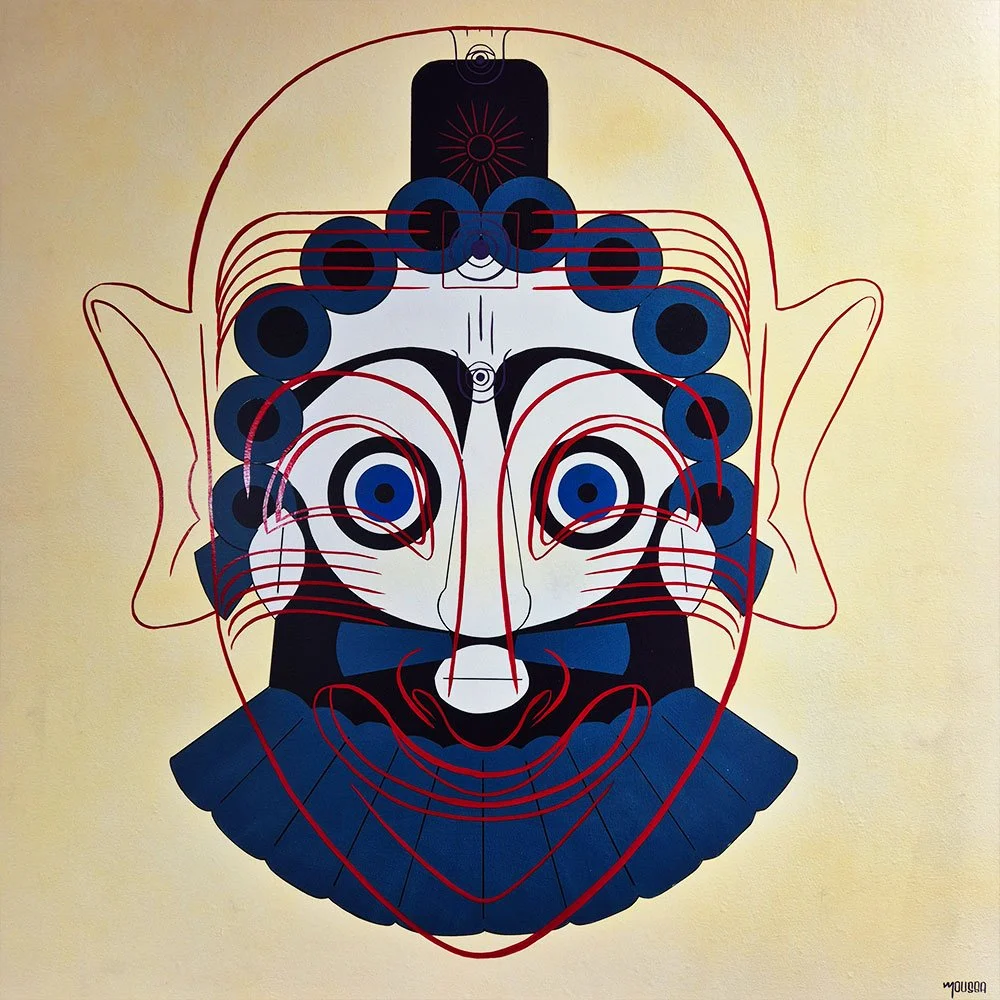 Image 1 of 6
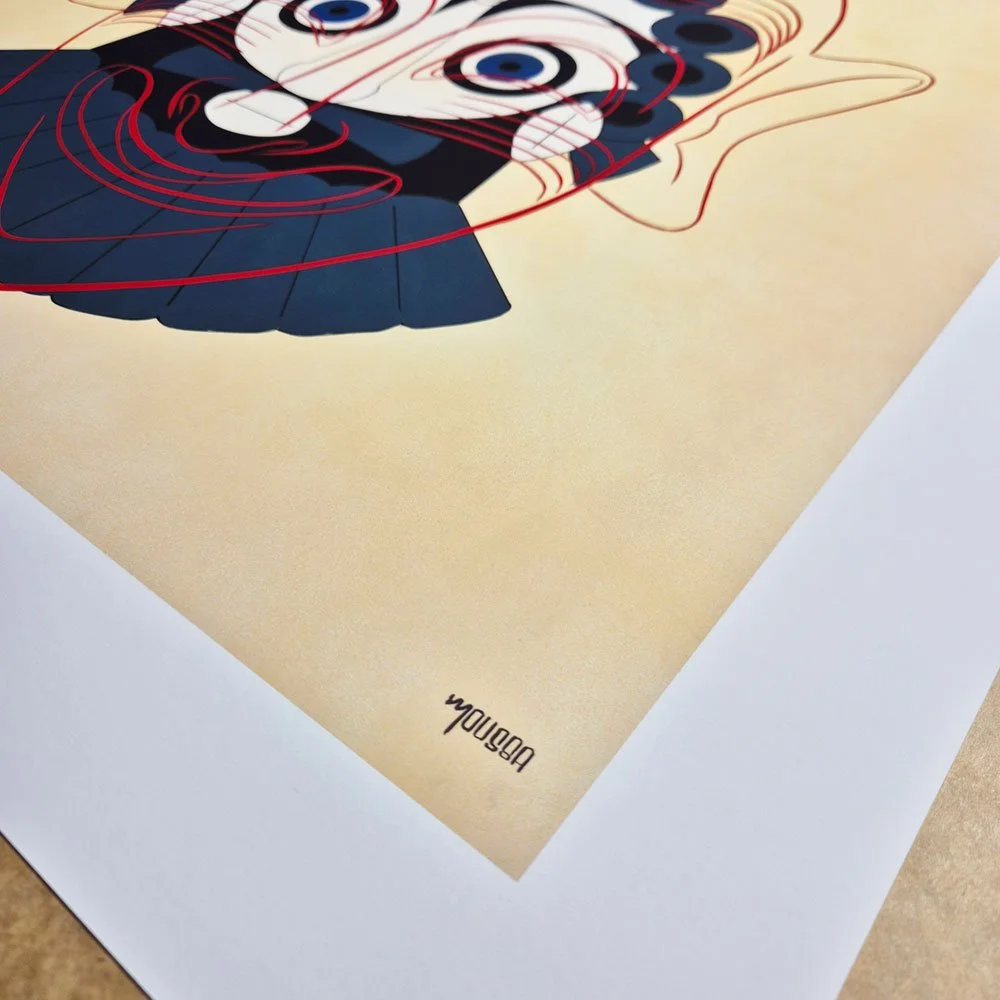 Image 2 of 6
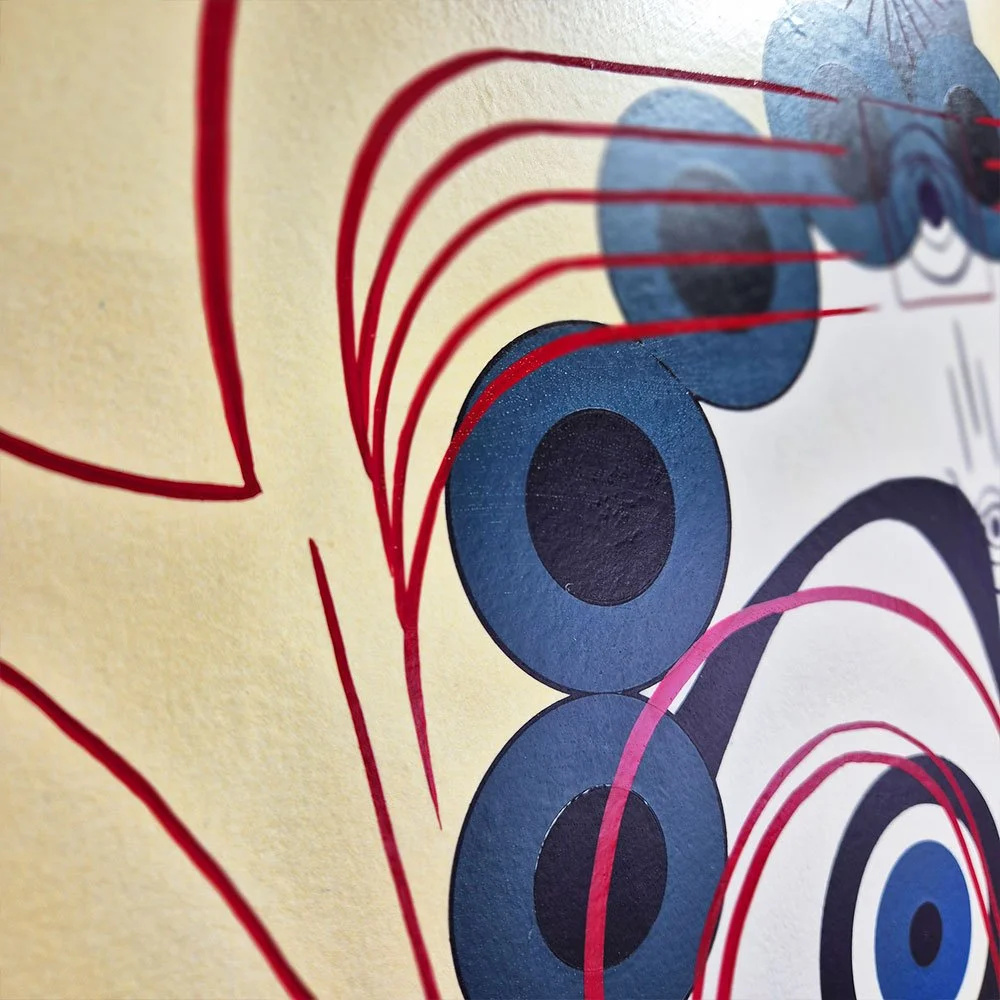 Image 3 of 6
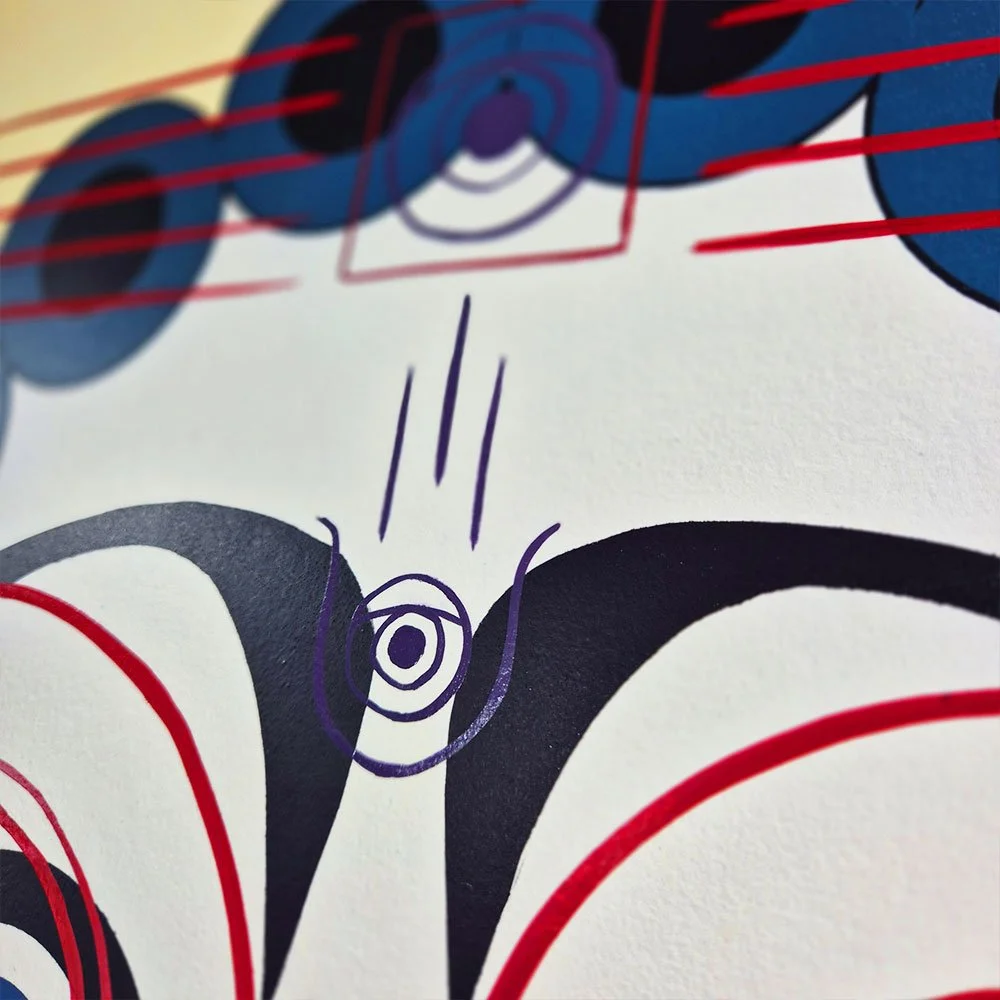 Image 4 of 6
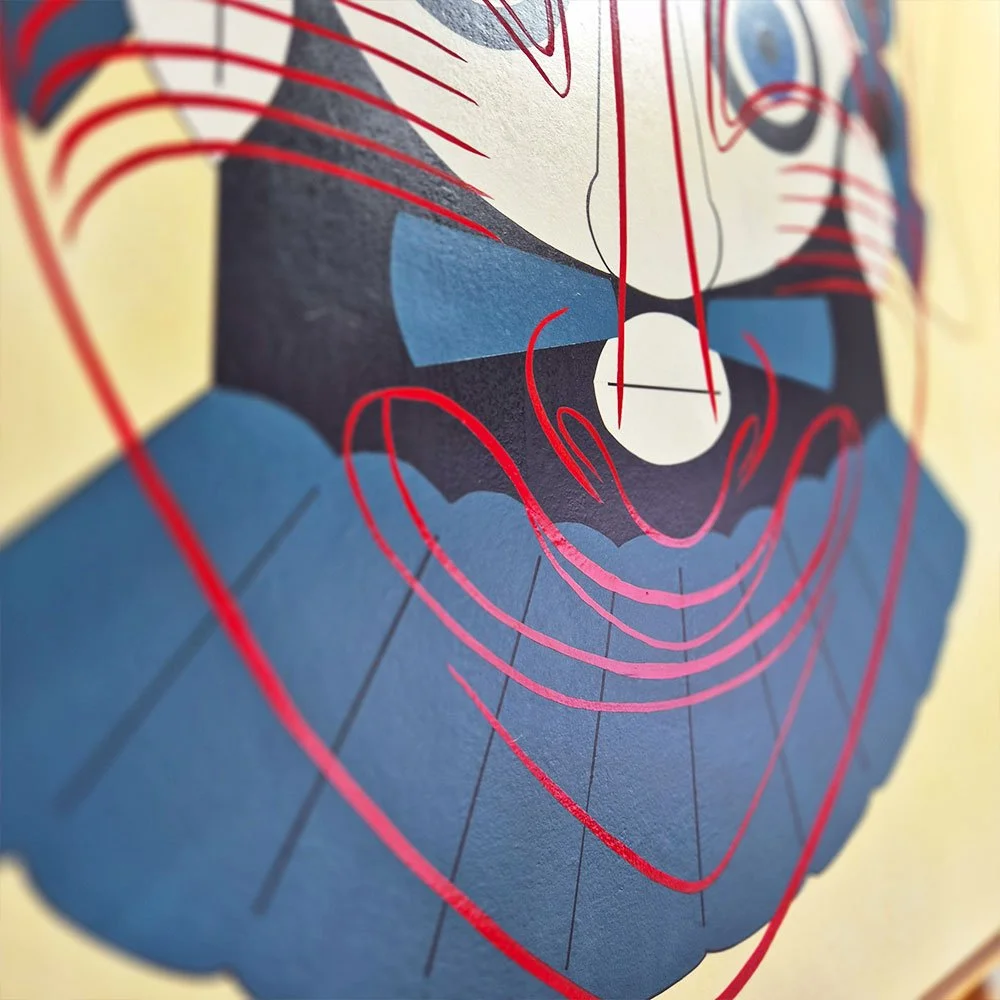 Image 5 of 6
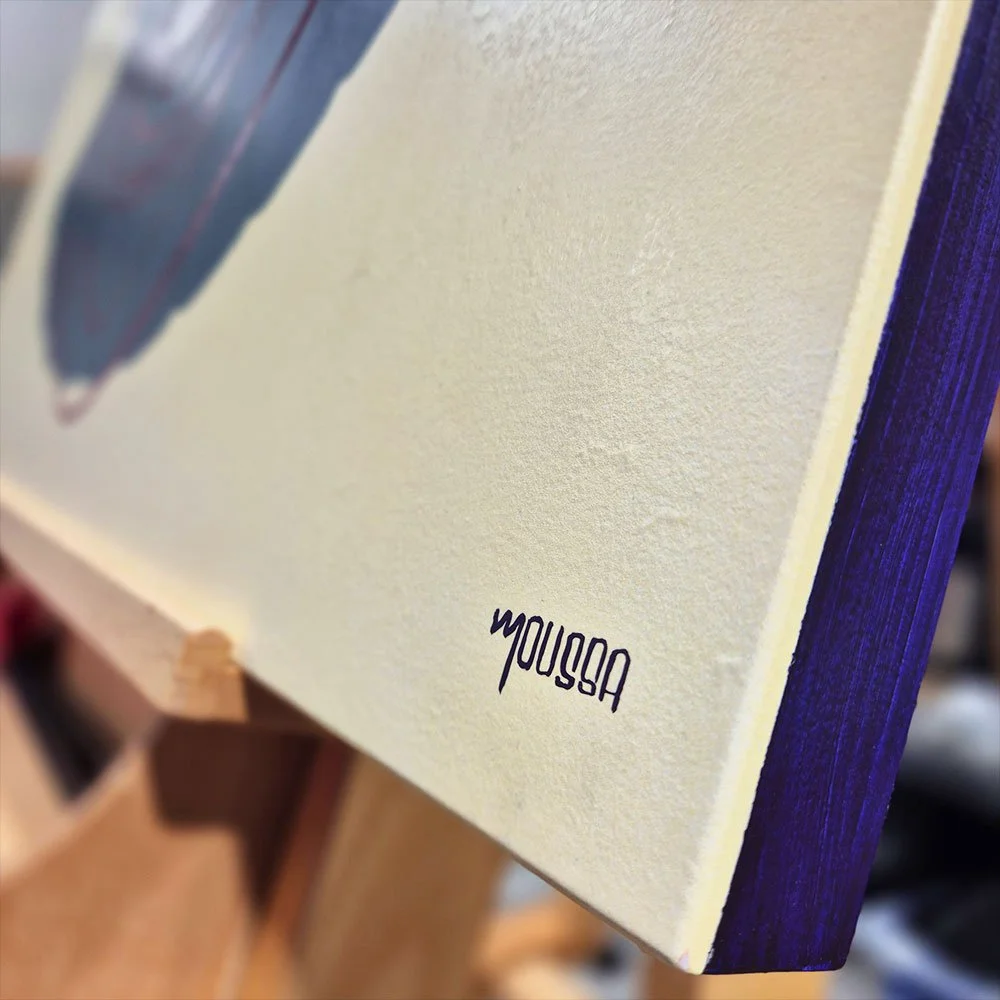 Image 6 of 6